What is the Fachsprachprüfung?
The Fachsprachprüfung (FSP) – the medical German language exam – tests whether you can use German confidently in everyday clinical work: talking to patients, writing documentation and handing over to colleagues. It is not a test of medical knowledge – your clinical expertise is taken for granted. What is graded is whether you are understood and whether you understand.
The legal basis is a 2014 resolution of the Conference of Health Ministers. Since then the rule applies nationwide: anyone applying for a licence to practise (Approbation) or a temporary permit (Berufserlaubnis) who did not study medicine in German must prove medical German at level C1 – on top of general German at level B2. In most federal states the state medical chambers (Landesärztekammern) run the exam; the details (venue, fee, waiting time, retakes) vary from state to state.
Who is waiting for you in the simulation
Six AI patients with a face and a voice – and a teacher who says every sentence for you. All of them are waiting for you in FSPkurs.

Herr Wagner, 28 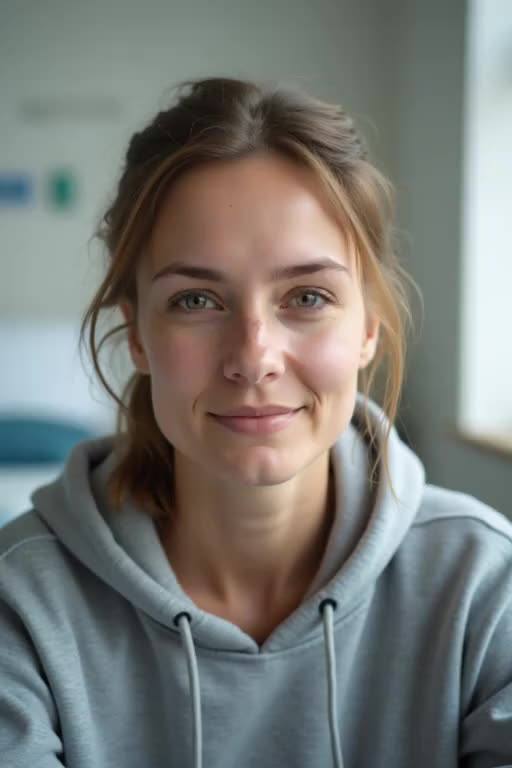
Frau Yilmaz, 24 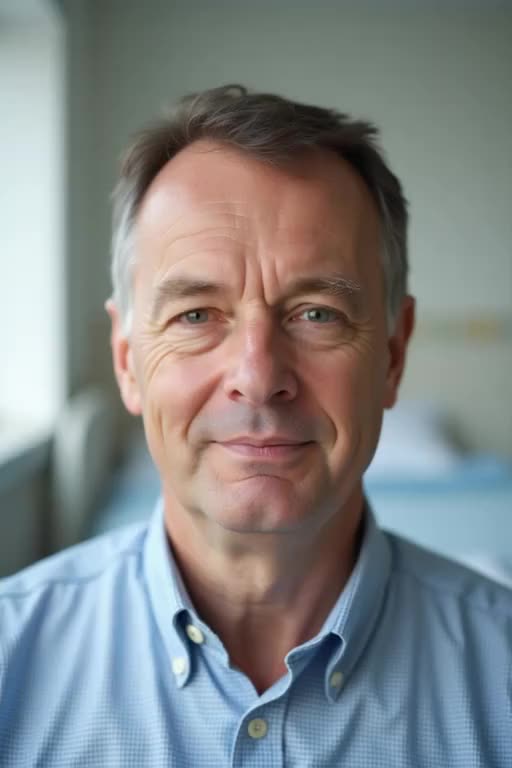
Herr Krüger, 47 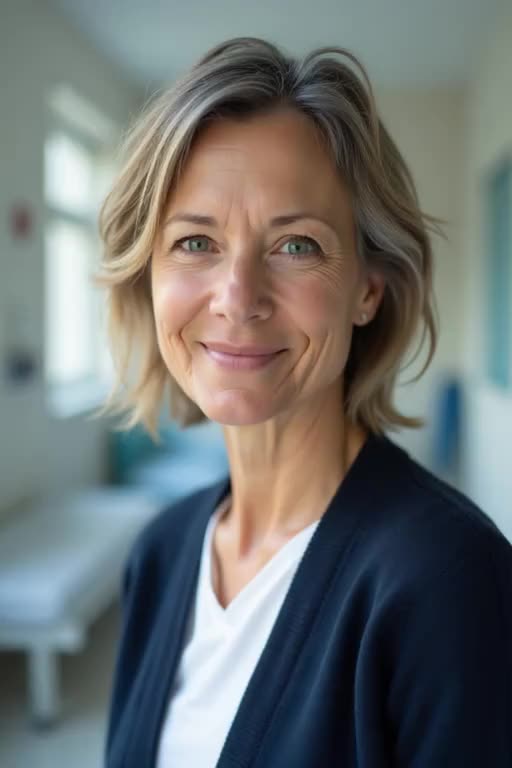
Frau Bauer, 52 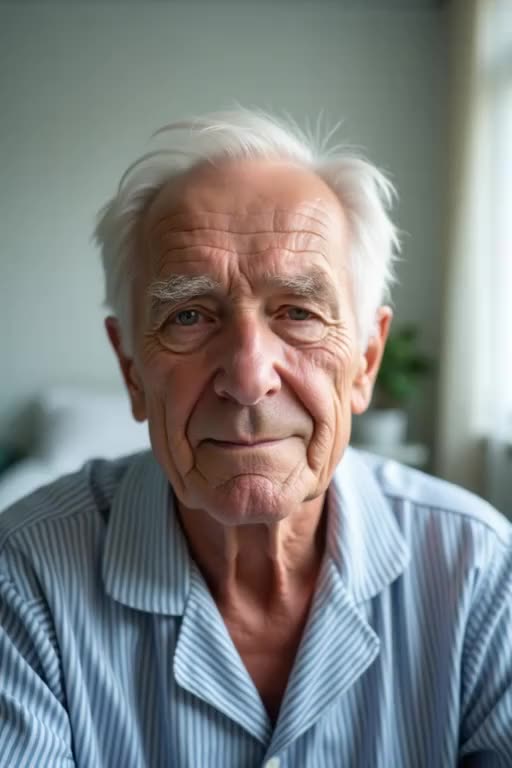
Herr Lehmann, 71 
Frau Schulz, 68
The three parts of the exam
The exam clock
Tap a part of the clock
Doctor–patient conversation (approx. 20 minutes)
You take the history of a simulated patient: current complaints, pain, previous illnesses, medication, allergies, substance use, family and social background. The key is plain language: the patient understands „Blinddarmentzündung“, not „Appendizitis“. You may take notes – and you will need them in the next part.
Documentation (approx. 20 minutes)
From your notes you write a structured medical report or fill in the history form: history, suspected diagnosis, differential diagnoses, next steps. Here the opposite applies: medical terminology, concise and correct. Handwritten or on a PC, depending on the chamber.
Doctor–doctor conversation (approx. 20 minutes)
You present the case to a senior physician (Oberarzt) – speaking freely, in professional register – and answer follow-up questions: Why this suspected diagnosis? What do you rule out? What is the next step? Some chambers add a short terminology test or an informed-consent conversation.
Who has to take the FSP – and when?
The exam applies to doctors with a medical degree from outside the German-speaking countries who apply for a licence to practise (Approbation) or a temporary permit in Germany. That covers degrees from EU states as well as from third countries. As a rule, only those who studied medicine in German or hold another recognised proof of medical German are exempt – exactly what counts is decided by the licensing authority (Approbationsbehörde) in each state.
The typical path: you file your application for the Approbation with the authority of your federal state. The authority checks your documents and registers you for the FSP – or you register yourself with the medical chamber using its letter. Between registration and exam date, a few weeks to several months pass depending on the state. So plan your preparation in parallel with the application, not after it.
Costs, registration, retakes
Each chamber sets its own fee; in most states it is roughly 350 to 600 euros per attempt. If you do not pass, you can retake the exam – how often and after what waiting period is again decided by the state. Current details for each state, with sources, are on the state pages:
What the examiners really grade
Hundreds of exam reports and the chambers’ grading criteria paint a clear picture. It is not about perfect grammar but about three skills:
- Understanding and being understood. You respond to what the patient says – not to what you expected. Asking for clarification is not a mistake; it is part of the exam.
- Switching register. With the patient you use plain language, with the senior physician medical terminology. Mixing the two loses points in both parts.
- Keeping the structure. History, report and presentation follow fixed sequences. If you have the structure down, you keep a thread even when nervous.
The most common reasons for failing are not vocabulary gaps but medical jargon used with the patient, an unstructured report and a presentation that buries the senior physician in details instead of starting with the suspected diagnosis.
How good is my German for the FSP?
Eight questions, about three minutes: plain language, Konjunktiv I, sequence, politeness, documentation – the points where the exam is decided. At the end you get a recommendation on where to start.
8 questions · about 3 minutes
Medical term of the day
10 November 2026Arteriitis (die)
In FSPkurs the AI grades your explanation every day – with a streak that keeps you going.
Start for freeFrequently asked questions about the FSP
How long does the Fachsprachprüfung take?
Around 60 minutes: three parts of about 20 minutes each – doctor–patient conversation, documentation, doctor–doctor conversation. Add waiting time and the results discussion; allow half a day on site.
What language level do I need?
Medical German at level C1 of the Common European Framework. To register, the authorities usually require a general-language B2 certificate. A C1 certificate alone does not replace the FSP – only certain medical-language certificates are recognised, depending on the state.
Is medical knowledge tested?
No. The examiners are doctors, but what they grade is language: intelligibility, register (plain vs. professional language), structure, vocabulary and grammar. A wrong suspected diagnosis costs no points – an unintelligible explanation does.
How much does the FSP cost?
Depending on the federal state, usually between roughly 350 and 600 euros per attempt. The exact fees are on our state pages, with source and date checked.
Can I retake the FSP?
Yes. In most states you can retake it several times, sometimes after a waiting period of a few weeks to months. You will find your state’s rule on its page.
Can I practise for the FSP online?
You can practise the conversation, the report and the presentation in FSPkurs with a talking AI patient – via microphone, graded by FSP criteria. Three days are free, no payment details needed. A short trial history-taking is available here without signing up.